Ciss Outdoors is an independent outdoor and travel publication exploring places through time spent outside. Writing draws on personal experience and regional familiarity, with an emphasis on practical judgement.
When someone asks what tent they should buy for wild camping, the instinct is to look for recommendations. Specific models. Best-of lists. Reviews.
But “wild camping” on its own doesn’t tell you enough information. A sheltered summer camp in woodland is a different scenario from an exposed autumn night on high ground. One-night trips have different needs from multi-day expeditions.
Before comparing tents, it helps to ask questions about them. The right tent is rarely about what is most popular or most talked about. It is usually about what fits your own trips and preferences. Below are practical topics to think about:
Budget
Budget sets the range you are realistically working within. There is little value in designing your ideal setup around something that is financially out of reach.
More expensive does not automatically mean more suitable. Likewise, a lower price does not automatically mean poor performance. It is about understanding what you are paying for and deciding whether it aligns with how you plan to use it.
When and How You’ll Use It

Before looking at features, think about context. Where are you likely to camp? What seasons are you aiming to camp in? What kind of terrain are you comfortable choosing? Are you usually solo? Will you have to share your tent at any point? Are your trips typically single overnights or multi-day stretches?
Most tents are labelled as two-, three- or four-season. These ratings give a rough indication of the conditions they are designed to handle, from fair-weather summer use to more demanding winter environments. They are useful as a starting point, but still need to be matched to your actual plans rather than taken at face value.
Materials and Longevity
Quality materials and construction affect how it copes with repeated use and poor weather. Tents are usually given a hydrostatic head rating for both the flysheet and the groundsheet. This number indicates the level of water pressure the fabric can withstand before leaking. Higher ratings generally offer more protection in sustained rain, but they should be considered alongside overall build quality rather than in isolation.
Quality kit also tends to circulate well through resale groups, which keeps it in use rather than in landfill. You may choose a tent that your needs outgrow, or one that you purchased because it was highly rated, but doesn’t suit your needs in practice. Knowing you can resell it if it doesn’t suit you reduces the pressure to get it perfect first time.

My first tent was a Vango Banshee 200, bought cheaply in a sale. It was not the lightest option, but it was solid and reliable. Price alone does not tell you whether something will work, and neither does brand.
Freestanding or Peg-Dependent
Some tents stand on their own structure. Others rely entirely on pegs and tension to hold their shape. If you have never considered that difference, it is worth doing.
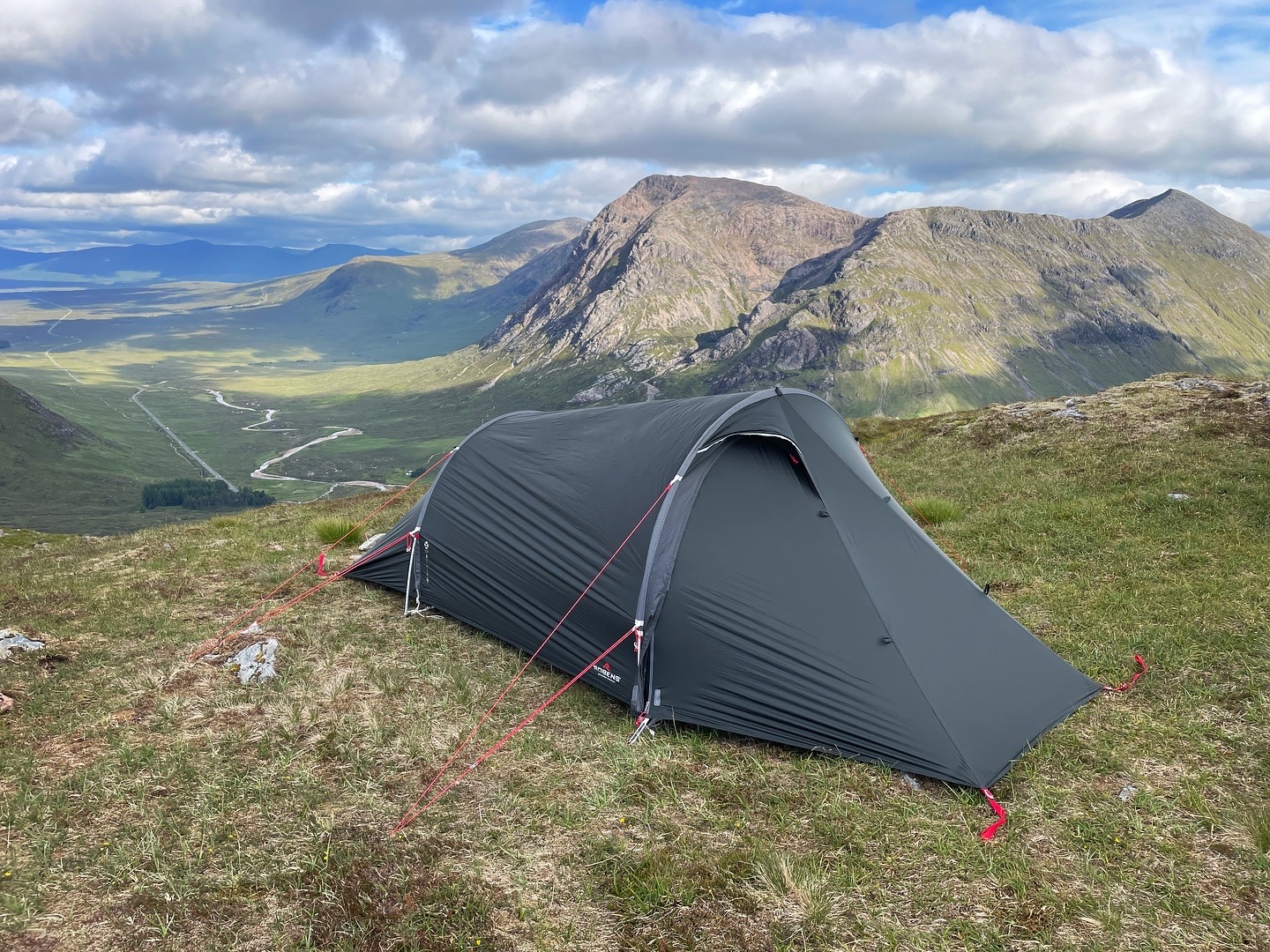
A freestanding tent can be pitched and then adjusted. You can step back, rotate it slightly, or move it if the ground is uneven. On very hard or rocky terrain where secure pegging is difficult, it will still stand. On a calm, sheltered night, once weighted with your kit and body inside, it may not need to be pegged at all.
Peg-dependent designs require solid anchoring from the outset. If you cannot get good purchase in the ground, that can limit where you are able to pitch. In more exposed or rocky locations, especially if you ever move towards higher or summit camps, that becomes more relevant.
Pitching Order

You can buy inner-first, outer-first or pitch-together tent systems. In UK conditions, rain during setup is common enough to take into consideration. With an inner-first tent, the sleeping area is exposed while you get the outer in place. Some people manage that comfortably. Others prefer a system where the outer goes up first, or both pitch together. Carrying a small cloth to deal with any moisture inside is a simple practical detail that can help.
Space and Living Practicalities
Sleeping area is only part of the decision. Think about where your rucksack, boots, and wet kit will go. Do you want a vestibule large enough to cook under in poor weather? Would two entrances make access easier?

Height matters as well. Do you want to be able to sit up comfortably inside the tent? Remember that you will likely be on a sleeping mat, which raises you higher off the ground than the internal height figure might suggest at first glance. Checking the stated dimensions gives you a better sense of how it will feel in use.
This is one of those things people often only realise after experience. The difference between a tent you can sit up in and one you cannot becomes a non-negotiable for some. For others, it is irrelevant.
Smaller Details to Think About
Once the main structure is clear, smaller considerations can help refine your choice:
- Ventilation and condensation management
- Colour and how visible or discreet you want to be in the landscape
- Ease of pitching alone in poor conditions
- Packed size and weight
- Pole design, materials and repairability
- Availability of spare parts and/or patches
Choose What Works For You
Even among experienced campers, setups vary widely. During my Mountain Leader training, we looked around at each other’s setups on a single overnight camp. Even within that group, there was huge variation. Some carried compact one-person shelters, others preferred roomier two-person tents. There were single porches, dual-aspect porches, free-standing and peg-dependent systems. There was no single correct tent among them.

Choosing a tent isn’t about finding the best model on a chart. It’s about answering the questions you’ve just read here: where you camp, in what conditions, how you pack and set up, and what matters most to you. If you start with those answers, the models that fit your needs become much clearer.
Ciss Outdoors sends out an email once a week with links to all new articles.
If you’d like to receive the Weekly Dispatch, enter your email address below.
Related reading:
Wild Camping Gear: What I Rely On, and Why
Solo Wild Camping: Confidence, Comfort & Safety in the Outdoors

Leave a Reply