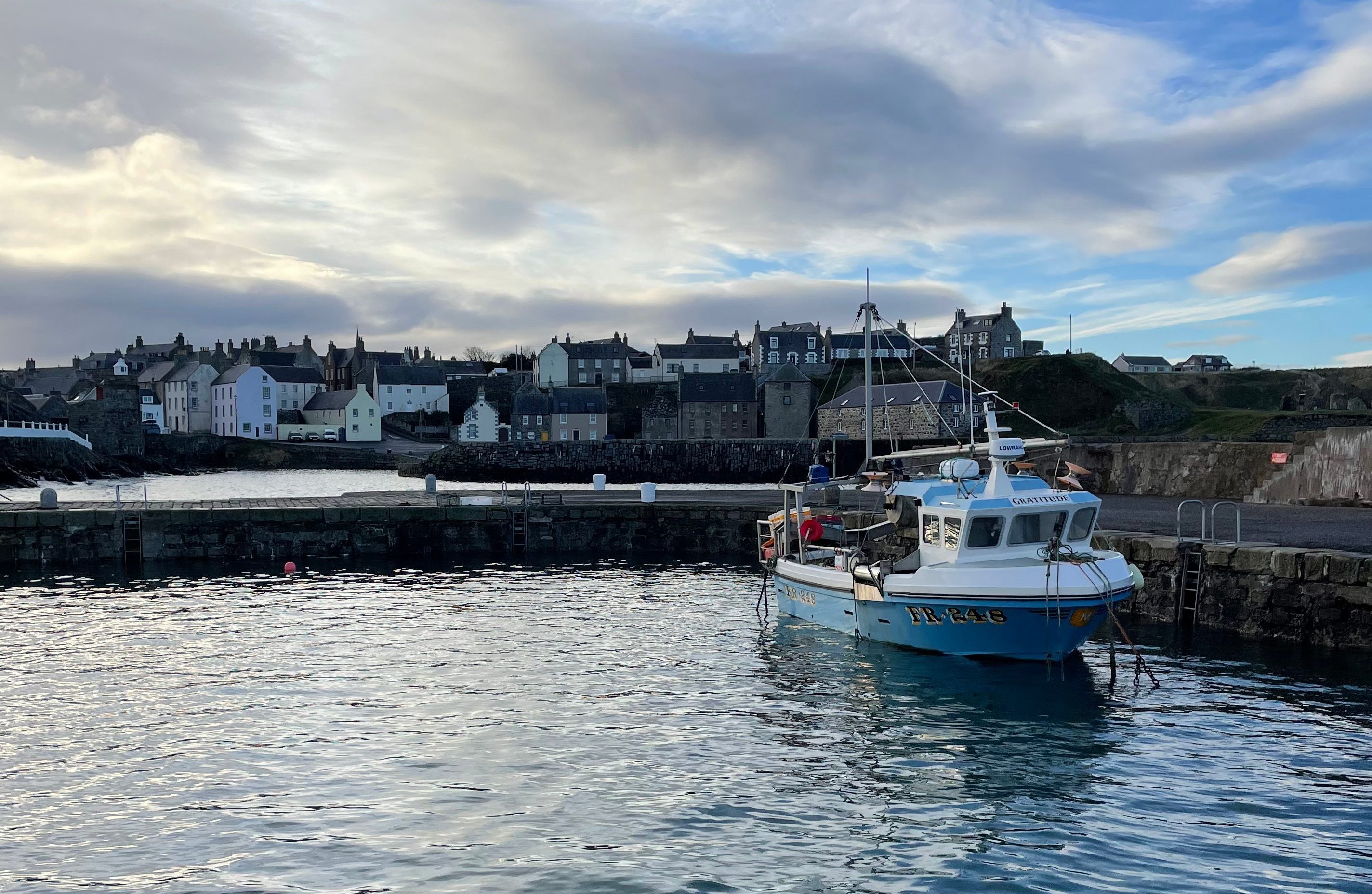
North East Scotland combines coastline, hills, glens, and small towns in close proximity, making it well suited to flexible outdoor travel. This guide is Ciss Outdoors’ central reference for exploring the region, bringing together walking routes, outdoor-focused travel, and practical information from across the site.
Rather than focusing on a single destination or fixed itinerary, this guide shows how different parts of the north east can be explored together. It brings together information that can be combined in various ways, whether you are planning a short break, a series of day walks, or a longer stay in one area.
The table of contents below will help you move directly to the sections most relevant to your interests and the kind of trip you are planning.
Coastal Towns, Harbours and Day Trips

The coastline of North East Scotland is often passed through quickly, but it lends itself well to slower exploration. Short stretches of cliff path, sheltered bays and open beaches sit close to working harbours and small towns, making it easy to build flexible days without committing to long routes or single destinations.
Along the Angus coast, places like Arbroath work particularly well for this approach. Clifftop paths lead to hidden coves and long beaches, while the harbour and town provide natural stopping points that break walks into manageable sections. It is a style of exploration that suits changing conditions and mixed energy levels.
Further north, coastal stretches in Aberdeenshire take on a different character again. Longer shoreline walks, wide beaches and exposed headlands create a sense of space that feels especially distinctive in winter, when quieter paths and dramatic light reward unhurried travel.
Readers interested in this style of coastal exploration can explore it in more depth through a flexible day-out guide to Arbroath’s coast, as well as a winter journey that follows the Aberdeenshire shoreline over several days.
Royal Deeside and Ballater: Villages and Walks

Inland from the coast, Royal Deeside offers a gentler rhythm centred around villages, river paths and low-level hills. Ballater, in particular, works well as a base for exploring on foot, with short walks radiating out into surrounding woodland, riverside paths and open moorland.
Rather than demanding long days or technical terrain, this area lends itself to shorter outings combined with time in the village. Walks can be linked with cafés, local food spots and relaxed evenings, making it a good option for weekend trips or slower travel.
The area also supports a mix of accommodation styles, from simple bases to more distinctive stays that suit low-key outdoor breaks. Taken together, Ballater and its surroundings demonstrate how North East Scotland accommodates travel that strikes a balance between time outdoors and comfort and recovery.
Those looking to explore this part of the region further can find detailed guides covering walking routes around Ballater, a village-based weekend itinerary, and a closer look at a small shepherd’s hut stay nearby.
The Angus Glens: Waterfalls, Corrie Walls and Longer Routes

The Angus Glens form the wilder interior of the region, where glacial valleys, steep corrie walls and open upland routes offer a stronger sense of scale. Here, walks often follow rivers and waterfalls before climbing into more exposed terrain, with long views and quieter paths rewarding steady effort.
At the heart of this landscape, Glen Doll stands out as a particularly strong hiking base, offering access to a wide range of routes from a single, well-established starting point. From lower glen walks to longer, more committing days on higher ground, the area supports repeat visits and varied ambitions, making it a natural location for walking in the Angus Glens. For walkers planning multiple visits or weighing up route options, there is a dedicated Glen Doll guide that brings routes together and explores how the glen works as a hiking base.
This part of North East Scotland is particularly well suited to walkers who enjoy committing a full day to the landscape, with clear distinctions between lower, sheltered ground and higher, more exposed terrain.
Beyond Glen Doll itself, neighbouring areas such as Glen Esk add further depth to the Angus Glens experience. Hikes like ones to the Falls of Unich and Loch Lee introduce a different character, with lochside tracks, waterfalls and a quieter feel that complements the hiking in Glen Doll without duplicating it.
Scenic Hill Walks and Local Landmarks

Not every walk in North East Scotland needs to be a long mountain day. Across Deeside and Aberdeenshire, shorter hill routes and landmark-focused walks offer a way to experience elevation, views and cultural context without committing to extended mileage.
Routes around Balmoral, for example, combine gentle climbing with historical markers and open views across Deeside, making them well suited to days when time is limited or conditions are variable. These walks often sit comfortably between low-level paths and full mountain routes, providing variety within a single trip.
Similarly, well-known hills such as Bennachie offer clear paths, defined summits and wide views, making them popular choices for both locals and visitors. They demonstrate how the region supports a broad spectrum of walking experiences without concentrating solely on technical or remote terrain.
Exploration of these routes is covered in guides focusing on landmark walks around Balmoral and well-known hill routes in Aberdeenshire.
Multi-Day Trips and Seasonal Exploration

While North East Scotland works well for day trips and short breaks, it also rewards longer journeys that link coast, towns and inland landscapes. Multi-day trips allow time for weather changes, seasonal conditions and slower transitions between environments.
Winter, in particular, brings a different character to the region. Short daylight hours, quieter paths and changing light emphasise coastal drama and wildlife, while inland routes require a more considered approach. Travelling over several days allows space to adapt plans and choose routes that suit conditions, rather than following a fixed schedule.
An example of this approach can be found in a three-day winter journey through Aberdeenshire, combining coastal walking, wildlife spotting and inland exploration.
Why North East Scotland Rewards Return Visits
North East Scotland lends itself to return visits. Its coast, glens and villages sit close enough together to allow flexible planning, while offering enough contrast to reward different approaches over time. Whether explored through day trips, weekend stays or longer journeys, it is a region that supports outdoor experiences without demanding a single way of moving through it.
Ciss Outdoors sends out an email once a week with links to all new articles.
If you’d like to receive the Weekly Dispatch, enter your email address below.
Browse all North East Scotland articles on Ciss Outdoors

Leave a Reply