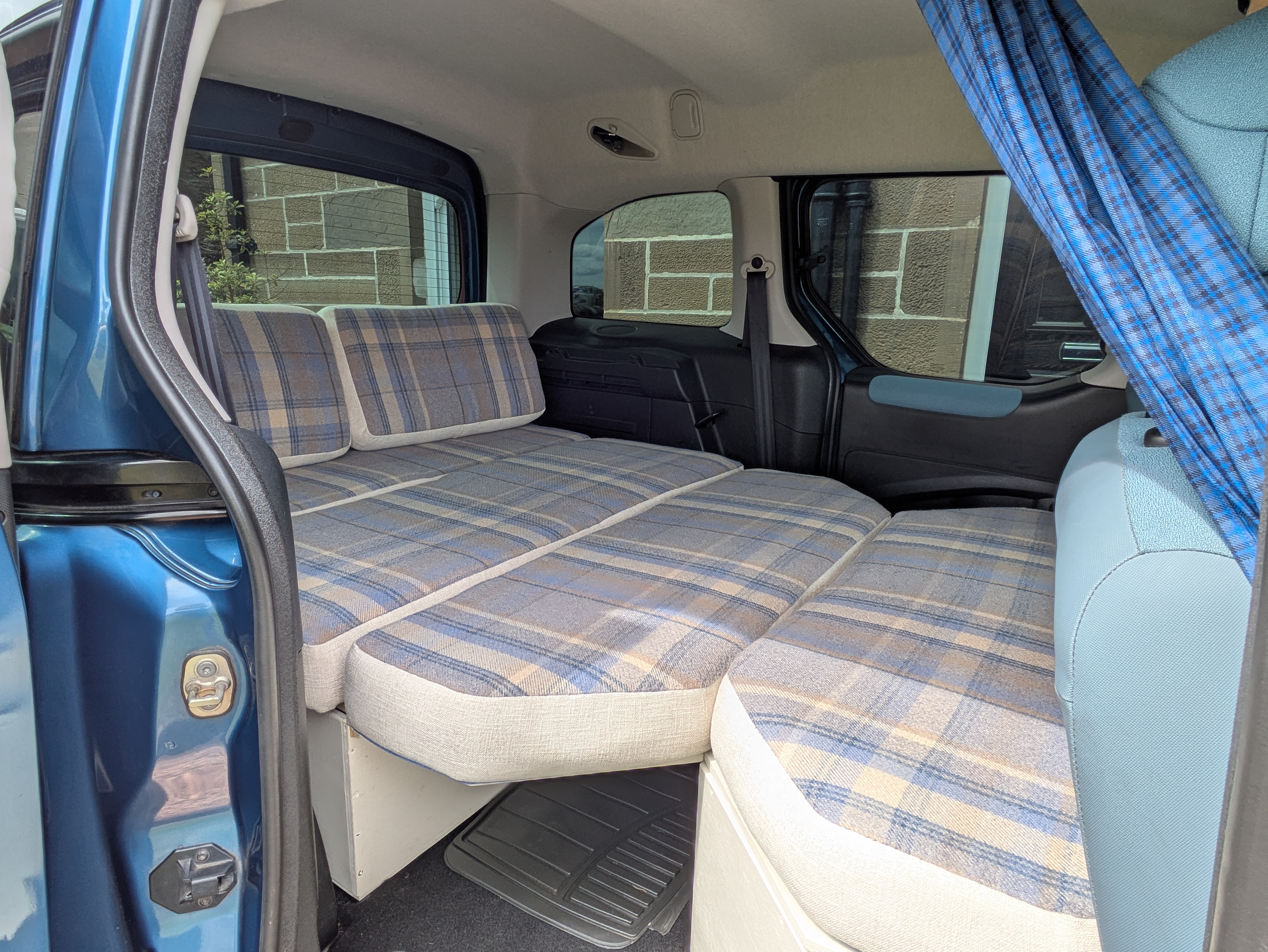
Ciss Outdoors is an independent outdoor and travel publication exploring places through time spent outside. Writing draws on personal experience and regional familiarity, with an emphasis on practical judgement.
Micro-campers appeal to people who want flexibility without excess, and freedom without committing to a large vehicle. They sit between car camping and full van conversions, offering just enough space to rest, reset, and move on again.
If you’re considering a micro-camper, the questions you’re likely asking tend to arrive in stages. Is this kind of setup right for how I travel? Can I realistically build a micro-camper myself? What matters most when you’re working with a small space? And once it’s done, how do you live in it comfortably and confidently?
This guide brings those questions together, drawing on practical build decisions and time spent sleeping and travelling in a micro-camper. It’s designed to help you see the bigger picture, rather than treating each part in isolation.
Is a Micro-Camper the Right Fit for You?
A micro-camper works best when it aligns with your priorities. Space is limited, but flexibility is high. You trade standing room and separation for ease of movement, discretion, and simplicity. For some people, that balance feels freeing. For others, it doesn’t suit the way they like to travel.
This isn’t about whether a micro-camper is better than something larger. It’s about fit. If you value being able to park easily, keep running costs down, and adapt trips as you go, a small setup often makes sense. If you need space to spread out, cook extensively indoors, or stay in one place for long periods, it may not.
Often, the easiest way to clarify what really matters to you is to see how it played out for someone else. Not as a blueprint to follow, but as a way of noticing which compromises mattered, which ones didn’t, and how the reality compared to the original idea.
What First Builds Tend to Teach You
No matter how much planning you do, a first micro-camper build usually teaches you things you didn’t expect. Some choices that feel essential early on fade into the background once you start living in the space. Other details, often small ones, quietly shape every trip.
In what I learned from building my first Berlingo micro-camper, the focus isn’t on instructions, but on what became clear once I started using the camper. It looks at why a micro-camper made sense at the time, how the build held up in use, and what only became clear over time.
If you’re early in the process, the sections on why I chose a micro-camper and what worked well are particularly useful for understanding how priorities translate into day-to-day reality. Later reflections, such as what I would do differently next time, aren’t about undoing the build. They’re about the small adjustments and earlier additions that become obvious once you’ve spent time using the camper.
Read alongside practical guidance, this kind of hindsight helps keep builds proportionate and adaptable.
Turning Priorities Into a Practical Build
Once you’re confident that a micro-camper suits your style of travel, the build itself becomes a series of practical choices rather than a single fixed plan. Layout, storage, sleeping comfort, and power all matter, but they matter differently depending on how you plan to use the space.
The DIY micro-camper build guide breaks the conversion down into manageable stages, focusing on budget-conscious techniques and choices that work well in small spaces. Rather than presenting a finished ideal, it shows how different decisions shape the way a camper functions, and how a build can be tailored around what you want to get out of it.
Sections such as planning and layout, and bed base and cushions, are particularly useful when you’re thinking about comfort and day-to-day usability. Others, including storage solutions and lighting and power, highlight how design decisions affect organisation, usability, and overall feel in a compact vehicle.
This approach makes it easier to see a micro-camper not as a standard template, but as something that can be shaped to support the way you want to travel.

Living in the Space You’ve Built
Completing a build isn’t the end of the process. It’s the point where attention shifts from construction to use. How you sleep, where you choose to stop, and the routines you develop all influence how comfortable the space feels over time.
In How I Stay Safe Sleeping in My Micro Camper, the focus is on habit rather than hardware. Small, repeatable choices help you settle at night, feel at ease in unfamiliar places, and rest properly. Safety, in this context, grows from familiarity with your space and trust in your own judgement.
This way of thinking becomes more relevant once the camper shifts from something you’ve built to something you simply live with and enjoy.
Bringing It All Together
A micro-camper works best when it’s approached as a set of considered choices rather than a single leap. Deciding whether it suits you, shaping a build around how you want to travel, and learning how to live comfortably in a small space are all part of the same picture.
The resources linked throughout this guide look at those stages from different angles. You don’t need to take every idea on board. The useful part is noticing which parts resonate, which questions feel most relevant to you, and how your own preferences start to take shape.
If this page has helped you feel clearer about whether a micro-camper fits into your life, or more confident about how you’d approach one, then it’s done what it set out to do.
Ciss Outdoors sends out an email once a week with links to all new articles.
If you’d like to receive the Weekly Dispatch, enter your email address below.
Related reading:
What I learned from Building My First Micro–Camper
DIY Micro Camper Build Guide: Budget Tips and Techniques
How I Stay Safe Sleeping in My Micro Camper


Leave a Reply