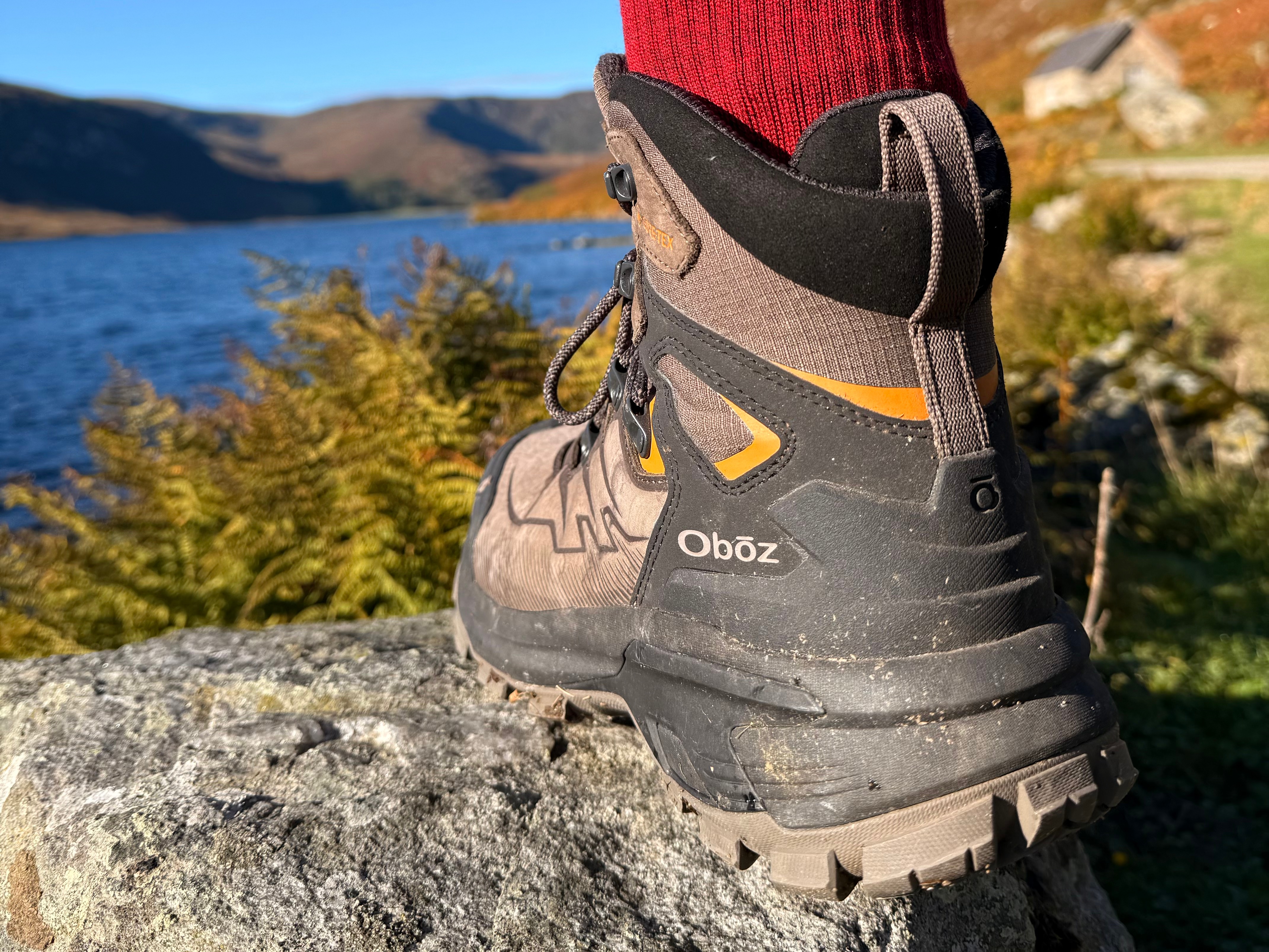
Disclosure: These boots were provided by Oboz with no obligation to review.
How reviews are approached
Gear and equipment featured on Ciss Outdoors is assessed through repeated use over time, rather than controlled testing or first impressions. Reviews focus on how items perform in practice, including context, limitations, and suitability, so readers can judge what may or may not work for them.
A substantial, supportive boot built for rugged terrain, with a noticeably warm build.
When the Bridger Ridge Mid GTX arrived in summer, I immediately got the sense they would come into their own later in the year. I wasn’t wrong. They have a solid, structured feel that suits colder weather and wet ground, and they quickly settled into the part of my hiking kit that I rely on once the temperature drops. I wear them on coastal paths, Munro routes and boggy hillsides, and they’ve joined me on a 10-day hiking trip to Shetland. They’ve also handled several long tree planting days, which are surprisingly demanding on footwear.

What You Need To Know
Model: Oboz Bridger Ridge Mid GTX
Size tested: Men’s UK 8.5
Time using them: around six months
Fit notes: roomy toe box, supportive midfoot, steady ankle hold
Best for: wet and colder conditions, mixed terrain, low-level winter walks
Key features: Gore-Tex lining, durable leather upper, Oboz’s trail tread rubber outsole
Fit and First Impressions
When I first laced up the Bridger Ridge Mid GTX, the boots felt structured and substantial in a way I usually associate with colder-weather footwear. The men’s 8.5 was a pleasant surprise: the slightly roomier midfoot suited my foot shape, and the hold around the ankle felt secure rather than restrictive. Even on those first walks, the toe box gave enough space for thicker socks without feeling sloppy.
Because the boots are substantial (approx 1.4 kg per pair for men’s 8.5), I expected a bit of stiffness and rubbing at the start, but the break-in period was almost non-existent. They softened just enough to move with my feet while still feeling supportive.
Several months on, that first impression holds. The balance between cushioning and firmness makes them feel steady rather than heavy, and they still give me the sense of putting on a boot that is built to work.

Waterproofing and Weather Protection
The Bridger Ridge Mid GTX has been completely reliable in wet conditions. I’ve taken them through coastal bog, saturated hillsides and long, rain-soaked days, and they haven’t leaked once. This Gore-Tex-lined boot is a real step forward for Oboz; its breathability is noticeably better than their previous waterproofing system, helping keep my feet comfortable on longer days.
For typical Scottish wet weather and cold ground, the protection feels dependable.

Grip and Stability
What I trust most about the Bridger Ridge Mid GTX is how planted they feel on uneven ground. The outsole grips well on steep, loose sections and muddy forest tracks, and they’ve handled icy winter paths with confidence. The balance through the midsole and ankle gives a steady, secure feel when I’m carrying a heavier pack or moving across mixed terrain.


Comfort on Long Days
The Bridger Ridge Mid GTX stay comfortable over long hours on my feet, whether I’m hiking or working outdoors. The support through the midsole and ankle holds up, and my feet don’t develop pressure points even when I’m carrying a heavier pack or doing physically demanding activities like tree planting. That consistency is what makes them a strong option for long days outside.

Durability
After months of use, these boots still look and feel remarkably solid. Other than a bit of mud, there’s very little to show how often they’ve been out.
It’s impressed me that they handle continuous use without showing early signs of wear. They remind me of a much-loved previous pair of Salomon boots, which I wore into the ground over several years. The Oboz Bridger Ridge feel like the closest modern equivalent.
I can’t say yet whether they’ll outlast those Salomons, but everything so far suggests they’re built with longevity in mind.
THE BOTTOM LINE
Who These Suit Best
- Hikers who want a supportive boot for wet and colder conditions
- Anyone needing reliable grip on mixed terrain
- Those who prefer a roomier toe box and forefoot with a secure midfoot hold
How They Perform
They stay waterproof, supportive and comfortable through long days on varied terrain, which is why they’ve become one of my go-tos for cold, wet conditions.
Are They Worth It?
If you want a durable boot you can trust in messy weather, these are absolutely worth considering. Strong performance, solid construction, and dependable comfort.
Related reading:
Review: Keela Women’s Merino Hoody – My Essential Mid-layer for Over a Year
Walking Poles 101: Why They Matter & How to Use Them

Leave a Reply