Ciss Outdoors is an independent outdoor and travel publication exploring places through time spent outside. Writing draws on personal experience and regional familiarity, with an emphasis on practical judgement.
Much of what we see about hiking, particularly online, is framed through outcomes. The most visible stories tend to focus on demanding days, clear endpoints, and experiences that can be easily shared, measured, and compared. For many people, that framing is motivating. It offers direction and a sense of purpose, and it reflects genuine enjoyment of challenging time in the hills.
The issue is not that this version of hiking exists, or that people find meaning in it. The issue is that it can start to look like the only version that matters. When one way of being outdoors dominates what we see, it quietly shapes expectations about what hiking is supposed to look like, and who it is for.
If that version of hiking resonates with you, there is nothing wrong with that. But if it does not, the disconnect can be subtle and unsettling. You might enjoy being outdoors while also feeling that your experience somehow falls short of what hiking is meant to be. Not because you lack ability or interest, but because what you are seeing does not reflect what you are drawn to.
Online Representation and What It Misses
Online hiking culture isn’t shaped only by what people actually do in the hills. It’s shaped by what gets repeated, rewarded, and shared. Certain kinds of days translate more easily into content, and over time they begin to dominate the picture. Even when nobody intends it, those representations can start to feel like the benchmark, quietly defining what looks impressive, legitimate, or worth aspiring to.
It’s also worth remembering that online visibility is not the same thing as experience, involvement, or contribution. Some of the most capable, thoughtful, and deeply connected people I’ve met in the outdoors have little or no online presence. They’re out there regularly, quietly building knowledge, skills, and relationships with the landscape, without any interest in documenting it.
I became aware of this gap more clearly after a chance encounter on the island of Raasay. I’d been there for the day hiking and ended up chatting to a woman waiting for the ferry back, her bike beside her and a dog curled up nearby. She’d grown up on Skye, knew the islands intimately, and was back for the holidays. She was on her way from a solo stay at the bothy at the very north of Raasay, where she’d spent a few quiet days on her own with her parents’ dog.
She was deeply knowledgeable about the landscape in a way that only comes from long familiarity. When we were parting ways, I asked whether she had any online presence, almost out of habit. She smiled and said no. She spent her time outdoors without documenting it, and had no interest in turning experience into content.
That moment stayed with me. Not because it was unusual, but because it wasn’t. It was a reminder that a huge amount of outdoor knowledge and connection exists entirely outside the online picture, carried quietly by people who don’t feel the need to represent themselves at all.
When a small, highly visible slice of the outdoor community comes to stand in for the whole, it can give a misleading picture of what hiking culture actually looks like. Not because anyone is doing something wrong, but because so much of what makes the outdoors rich, generous, and varied simply doesn’t translate into content.
Hiking Beyond a Summit
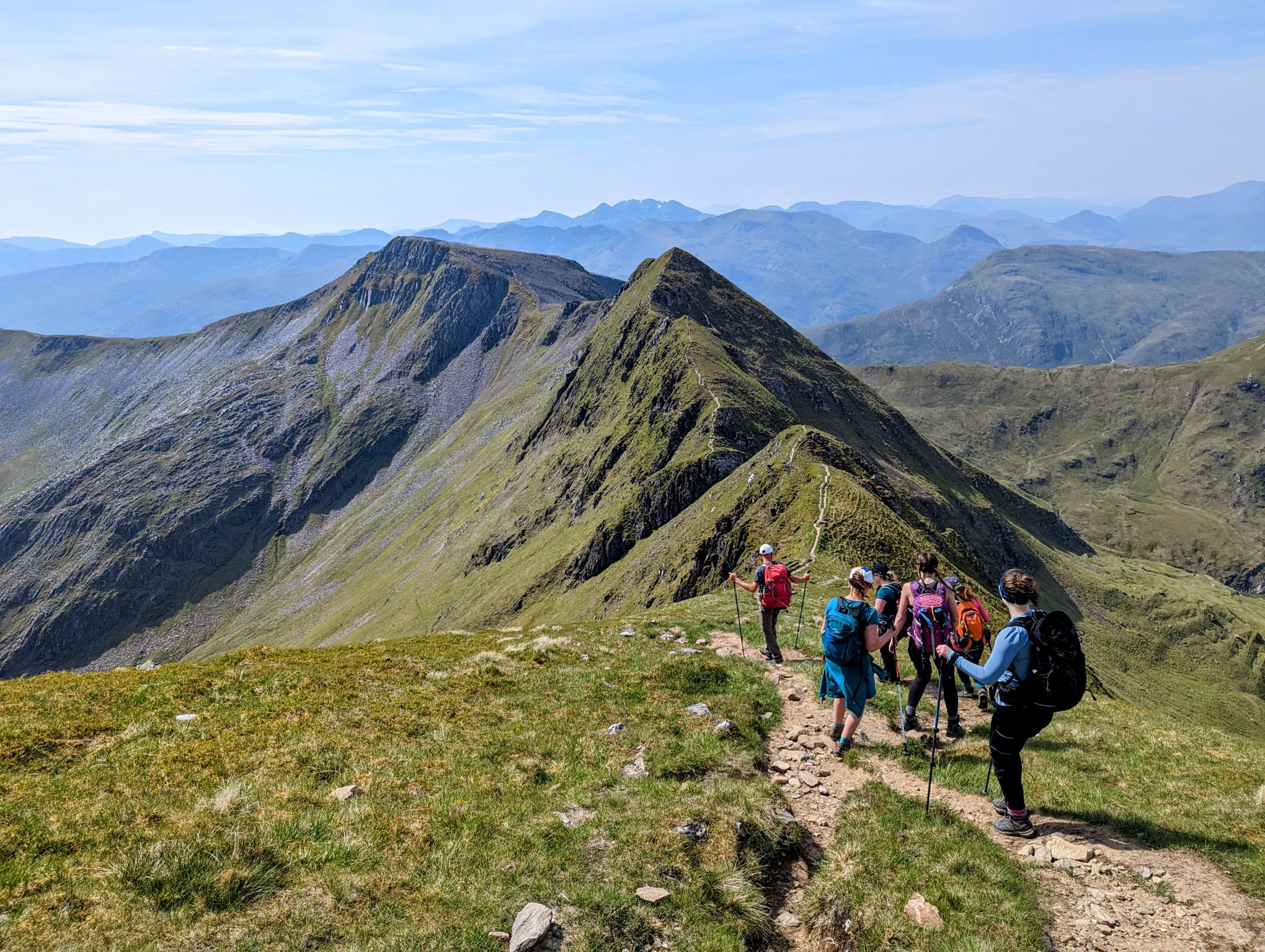
At its simplest, hiking is about moving through a landscape on foot. It is about time spent travelling rather than arriving at a single point. When that idea comes back into focus, the pressure to justify a day by the ascent begins to loosen.
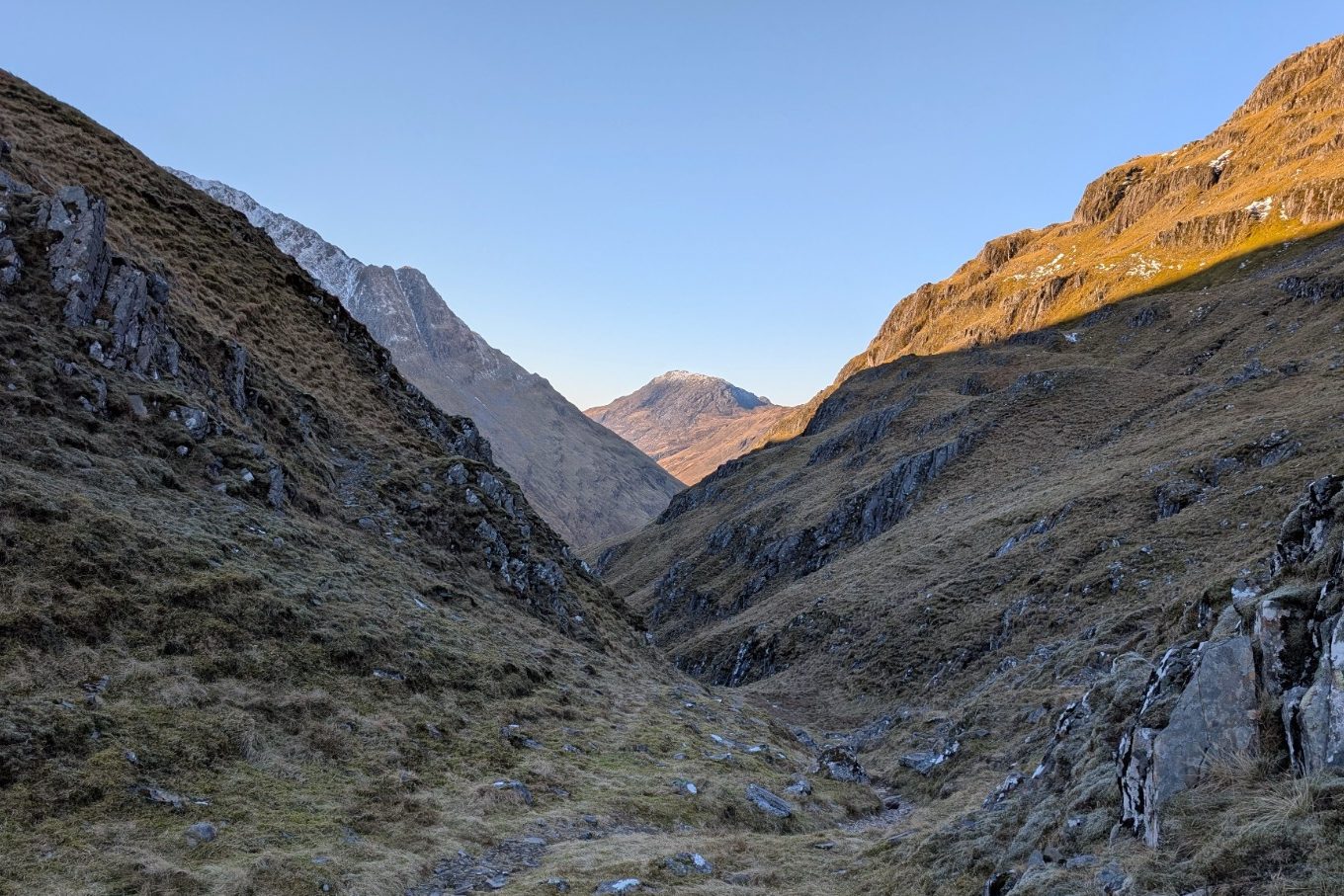
Walking through glens and valleys gives a different sense of scale and connection. You see how ridges link together, how slopes shape the land, and how weather and light move across a place. Mountains feel less like destinations and more like part of a wider, living landscape that you are moving within.
Some hikes stay with you not because of a single defining moment, but because of how the day unfolds. Woodland gives way to open ground, views appear and disappear, and the feel of the place changes gradually around you. The satisfaction comes from immersion, from spending enough time within a landscape that its details begin to register. You are not waiting for the best part. You are already in it.

Bothies, Culture, and Different Ways of Belonging Outdoors
Some parts of hiking culture are shaped less by where you go, and more by how people relate to place over time. Bothy journeys are a good example of this. For some, they involve shared days out and time spent together. For others, they are quiet, solitary journeys, shaped by self-reliance and time alone in remote landscapes.
Bothy culture is not defined by whether you arrive alone or with others. It is rooted in long-standing traditions of access, care, and respect for place. Those traditions exist whether or not they are visible; they don’t rely on an audience to be meaningful.
In recent years, bothies have become more documented on social media, often presented as destinations or experiences to be captured. That visibility reflects only a small part of a much broader culture. Much of what sustains bothy life happens away from screens, through norms, shared responsibility, and a deep understanding of place.
This is another reminder that what appears online is only ever a sliver of the whole. Hiking culture, like the landscapes it moves through, is deeper and more nuanced than any single representation can show.
Allowing Yourself to Broaden
Many people come to hiking with a particular focus. That focus can be rewarding, especially early on, when it brings clarity and confidence. Over time, it is common for interests to widen.
What changes is not enthusiasm, but perspective. Challenging days may still matter, but they are often accompanied by quieter routes, longer journeys, and experiences chosen for their ability to connect you to the landscape or community. The range of what counts as a good day expands, and with it, the freedom to choose differently.
Hiking in a Way That Makes Sense to You
Hiking can be demanding and ambitious. It can also be exploratory, social, or purposefully solitary. It can involve high ground or remain firmly at lower levels. It can be about reaching somewhere, or about moving through a place and letting the day unfold as it takes shape.
If the version of hiking you see most often does not resonate with you, you are not missing something essential. And if it once did, but no longer does, that shift is valid.
Hiking has never been one thing. It has always held many ways of being outdoors. The only real question is which of those ways speaks to you.
Ciss Outdoors sends out an email once a week with links to all new articles.
If you’d like to receive the Weekly Dispatch, enter your email address below.
Related reading:
Starting Outdoors: Why It’s Never Too Late to Begin
Glen Doll to Corrie Fee: A Scenic, Accessible Hike in the Angus Glens


Leave a Reply to India SafarisCancel reply