Ciss Outdoors is an independent outdoor and travel publication exploring places through time spent outside. Writing draws on personal experience and regional familiarity, with an emphasis on practical judgement.
There’s no better season than wild garlic season! One of my favourite things about spring is the abundance of wild garlic that starts to sprout in the most unexpected places. I’m lucky enough to live near a beautiful spot where wild garlic grows in abundance, and I spent some peaceful time recently picking leaves for a homemade treat.
Foraging For Wild Garlic
If you’re new to foraging, it’s essential to familiarise yourself with sustainable foraging practices. Be mindful of your surroundings and ensure you’re foraging responsibly. Read the Woodland Trust’s foraging guidelines for the UK here. You should never uproot the plant, taking foliage and flowers sparingly from a wide area. Always check the regulations for foraging in your country and only pick what you’re certain of. Your safety and the preservation of nature should always come first.


Please note: in the UK, foraging is not permitted at protected sites such as National Nature Reserves (NNR) and Sites of Special Scientific Importance (SSSI). Please check before you visit.
Equally important is to be sure you are picking the right leaves. The Woodland Trust offer a very detailed guide about what wild garlic looks like and the types of places you can find it. It includes important information about how to distinguish wild garlic from similar lily-of-the-valley, which is poisonous.


Wild Garlic Pesto Recipe
Now, let’s talk about the recipe. My wild garlic pesto isn’t quite the traditional pesto, so please, pesto purists, no judgment! It’s my own twist on the classic, and trust me, it tastes incredible.
Ingredients
- 60g toasted cashew pieces
- 50g grated Parmesan
- 100g cleaned wild garlic leaves
- 150ml good quality olive oil
- A dash of lemon juice
- Seasoning to taste
Instructions
Wash the wild garlic thoroughly: Start by giving your wild garlic a really good rinse. Wild leaves can carry dirt, insects, or other bits of the forest floor, so soak them in a bowl of cold water, give them a gentle shake, and then pat dry with a clean tea towel or spin in a salad spinner.
Toast the Cashews: Start by toasting the cashews in a dry pan over medium heat. Stir them occasionally until they begin to brown – this brings out their natural flavours. Once toasted, allow to cool.
Pro Tip: Keep a close eye on them to avoid burning!


Combine Ingredients: In a food processor, combine the toasted cashews, wild garlic, and Parmesan. If you’re able to forage more wild garlic, feel free to add up to 150g. If you can’t find enough wild garlic, simply top it up with a clove of regular garlic.
Blend to Perfection: Slowly add the olive oil bit by bit as you blend the mixture. You’re aiming for a consistency that’s thick but spreadable – 150 ml is a good guide, but go by eye and taste. Scrape down the sides as needed to make sure everything is evenly blended.


Season and Taste: Once you’re happy with the consistency, add a dash of lemon juice and blend again. Taste the pesto and adjust the seasoning – maybe a little more lemon or some cracked black pepper. I didn’t find I needed salt, as the Parmesan adds plenty.
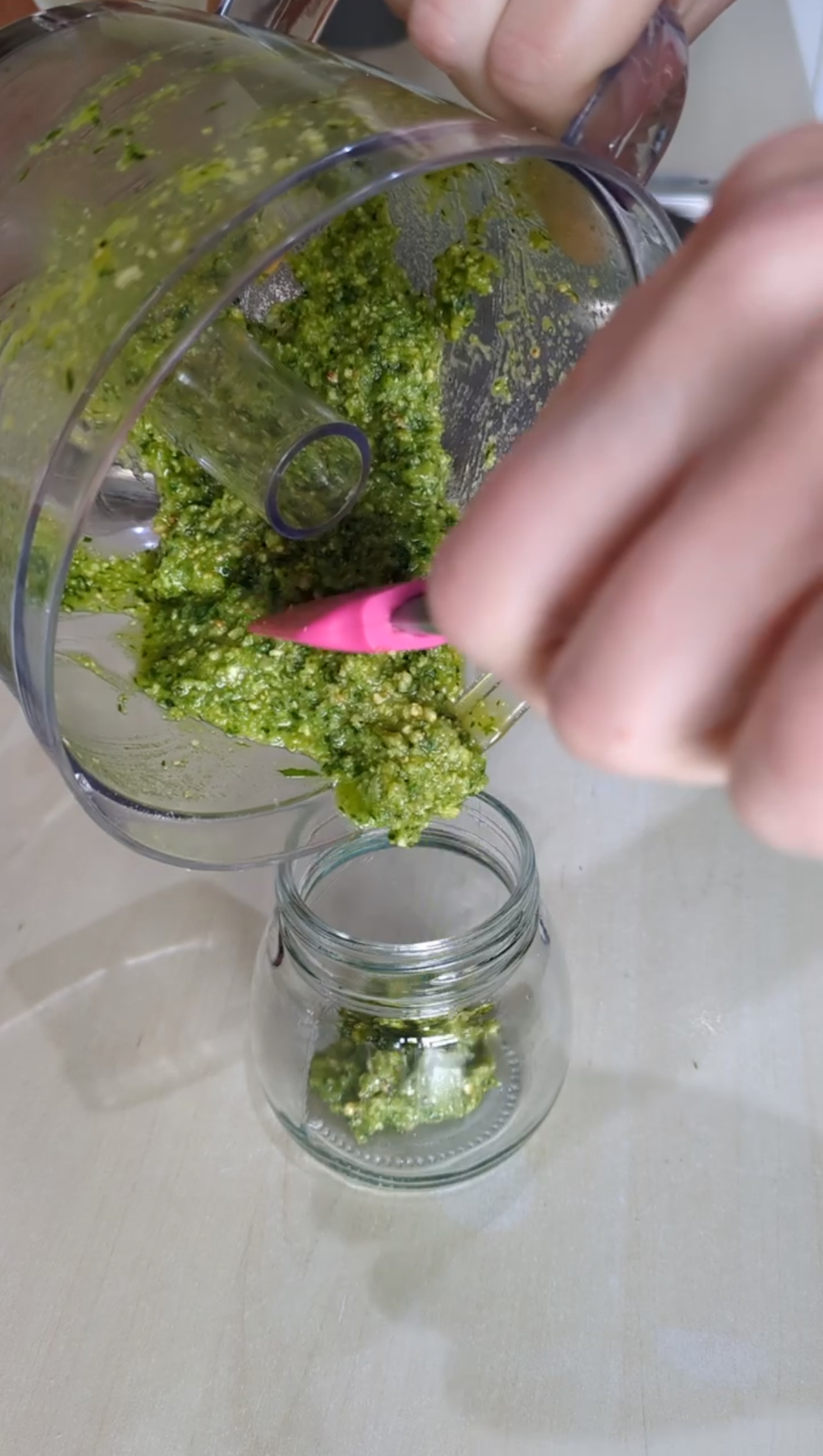
Store and Enjoy: Transfer your pesto to an airtight container. Pour a thin layer of olive oil on top to help preserve it, and store it in the fridge. It should last up to two weeks, though if your household’s anything like mine, it’ll disappear long before that!
This wild garlic pesto is perfect with pasta, slathered on sourdough toast, spooned into soups, or stirred through roasted veg. It’s bright, punchy, and full of that wild, garlicky goodness that makes spring so special. Happy cooking.


Leave a Reply